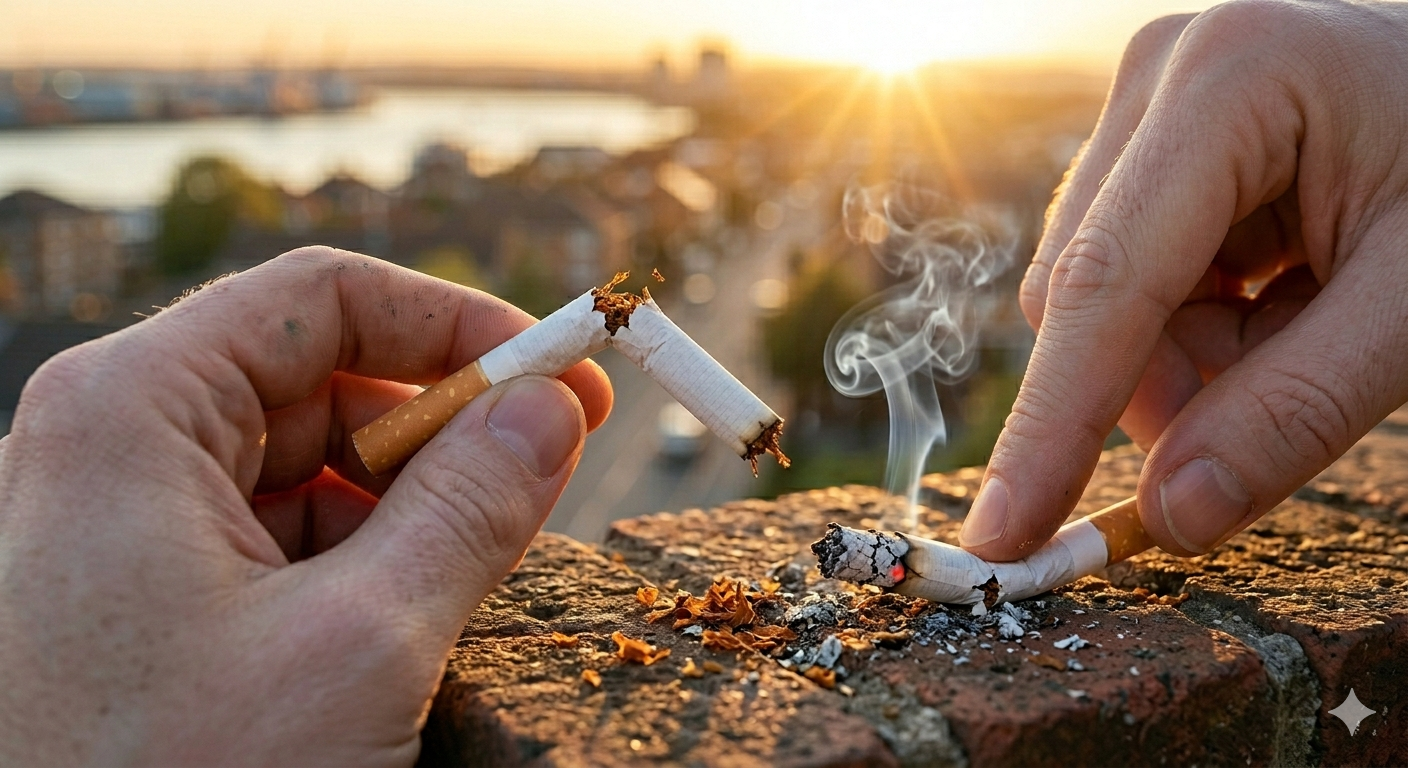
A Smokefree Generation Will Be Built Socially
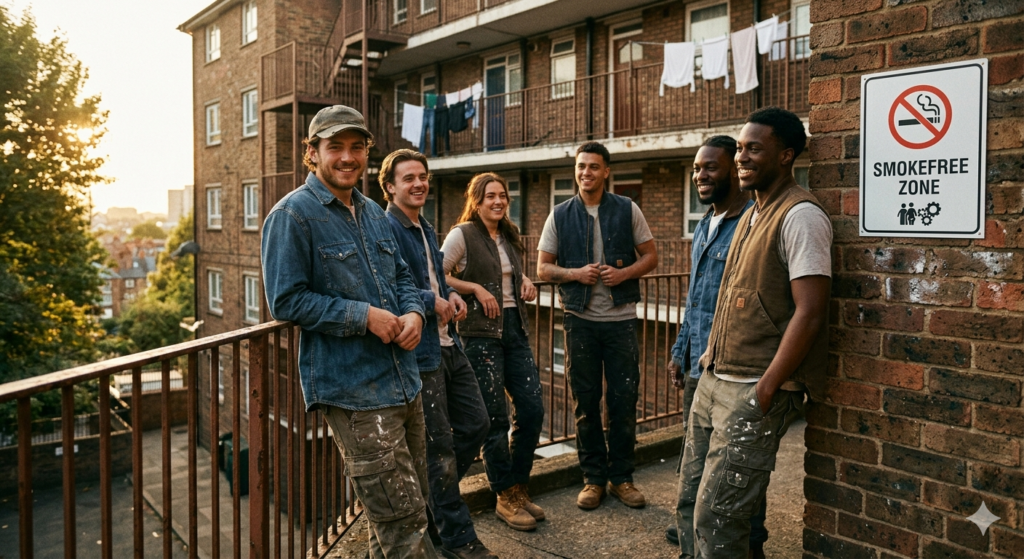
The Tobacco and Vapes Act receiving Royal Assent is genuinely good news, and I want to say that without qualification before anything else. Smoking remains one of the most stubborn drivers of early death and preventable illness in this country. The smokefree generation policy is bold in the best sense: a decision made now whose benefits will be felt by people currently in primary school. That kind of long-horizon thinking is rare in public policy and it deserves proper recognition.
Stop smoking services, stronger enforcement, tighter regulation of products engineered to hook young people onto nicotine: all of it is necessary and all of it will save lives. The ambition here is real and the evidence base is solid.
What I find myself thinking about, alongside all of that, is the implementation picture. Because legislation creates conditions. It does not, on its own, create change. The change happens in communities, in relationships, in small everyday moments where someone decides differently and that decision becomes visible to the people around them. And there is a lot of research, as well as a lot of lived experience, that tells us how those moments actually come about.
We know that people are not primarily moved by information. Knowing something is harmful and changing your behaviour because of that knowledge are two very different things, and the gap between them is where most public health campaigns quietly fail. What actually shifts behaviour, over time and at scale, is a change in what feels normal within your social world. When the people around you do something differently, when it becomes part of how your community lives rather than an instruction from outside it, the calculus changes. People are deeply social creatures. We take our cues about acceptable and desirable behaviour from the groups we belong to and the people we trust. This is not a weakness to be designed around. It is the primary mechanism through which lasting change happens.
Every community where smoking rates remain high already contains people who have quit. People who tried more than once before it stuck. People who carry a quiet authority on this subject precisely because they are not professionals, because they know the pull of it from the inside, and because the people around them know that too. These individuals are an extraordinary and largely untapped resource. Their stories travel in ways that no campaign message can replicate, because stories shared between people who know each other carry a weight that broadcast communication simply cannot match.
What would it look like to genuinely build on that? Not a formal programme with a manual and a certificate, though there is a place for structured peer support. Something more like a serious commitment to finding those people, understanding the networks they sit within, and creating the conditions for what they know to spread. In my experience, the conversations that actually shift someone’s thinking about their health happen in places we rarely design for: after a community group, on a doorstep, in a sports hall changing room. The question is whether we can get better at recognising those sites of influence and working with them, rather than alongside them or, worse, past them.
There is also something important in the identity dimension of this. People change their behaviour durably when the new behaviour becomes part of how they see themselves, not just something they are doing because they were told to. A smoker who quits because of a fine or a restriction is in a different position to someone who quits because not smoking has become consistent with the kind of person they want to be and the kind of community they want to live in. Building that second kind of change is slower and harder to measure, but it is the kind that holds. It is also the kind that spreads, because identity is partly social: who we are is shaped by who we are with.
The enforcement and regulatory infrastructure this Act requires deserves proper resourcing and I hope it gets it. Trading Standards teams, stop smoking services, public health practitioners working in the communities with the highest rates: all of them are essential. But running alongside that formal architecture, there is a more relational, community-rooted piece of work that could make the difference between the smokefree generation being a legal category and being a lived reality.
The law has set the frame. Filling it in is a job that belongs to communities as much as it belongs to councils, and the best thing we can do now is make sure we are working with the grain of how communities actually change, not just the grain of how policy gets delivered.